
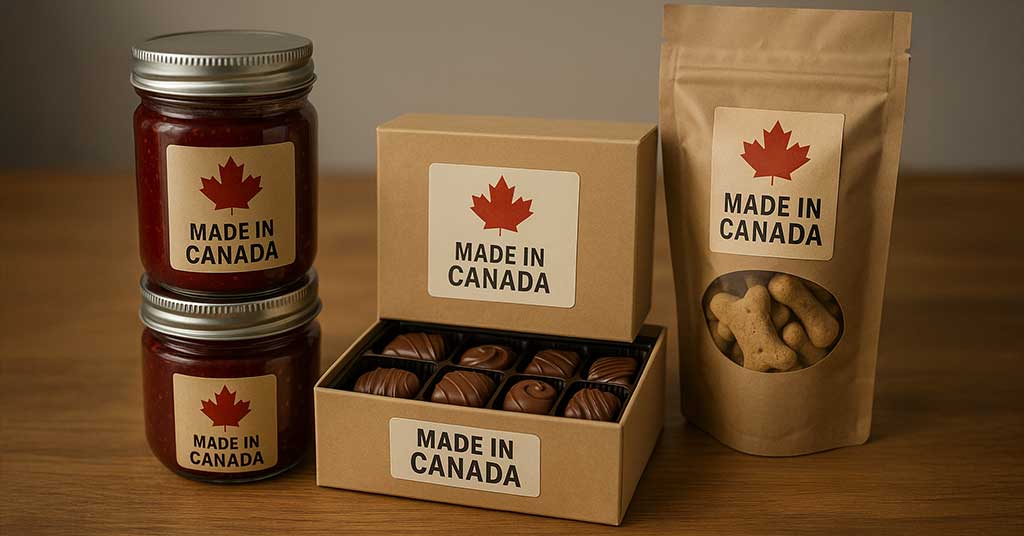
Ending the de minimis rule will hit small Canadian food exporters hard, threatening their access to the U.S. market

On Aug. 29, Washington will shut down a trade channel that has quietly sustained hundreds of Canadian food entrepreneurs.
By ending the de minimis exemption—the rule that lets small shipments under US$800 cross the border duty-free—American policymakers are putting new costs and red tape on the very jam makers, chocolatiers and specialty food exporters who rely on this rule to reach their first customers south of the border.
This was never about bulk commodities. Wheat, beef and canola oil still move under the United States-Mexico-Canada Agreement with zero tariffs. What is being dismantled is the hidden artery that kept small players alive: the Nova Scotia jam maker shipping gift boxes to Vermont, the B.C. chocolatier sending truffles to Seattle, the Ontario pet treat company tapping into the booming specialty market.
Independent stores in New York, Chicago and Los Angeles also counted on these small, frequent Canadian shipments to diversify their shelves. That reliance means American consumers, too, will see fewer Canadian brands and higher prices.
Estimates suggest that between $500 million and $1 billion worth of Canadian food exports to the U.S. move each year under the $800 threshold—a fraction of Canada’s $40-plus billion agri-food trade. The figure looks minor, but for the companies involved it often represents their entire U.S. strategy.
Market access is not only about tonnage; it is about competition, choice and the chance for Canadian food culture to make its mark abroad. When small firms lose that ability, entire product categories vanish along with local jobs and community investment.
Ottawa could take steps of its own. Canada’s de minimis threshold is only C$150, a fraction of the former U.S. level. In practice, Canadian consumers never enjoyed the same duty-free benefit when buying from the U.S., while Canadian exporters built their entry strategies around Washington’s much higher limit. The contrast makes Ottawa’s inaction even harder to defend.
Raising Canada’s threshold would benefit consumers at home and give Ottawa stronger footing to demand reciprocity in Washington.
Shrugging this off as a technicality is a policy failure. Ottawa has known for years that small exporters are vulnerable, yet has done little to shield them. If Washington is willing to raise barriers, Canada must be ready to defend its entrepreneurs.
The contradiction is stark. USMCA safeguards large-scale trade, yet Washington is dismantling the very system that nurtured the small businesses that agreement was supposed to help. The message to Canadian exporters is blunt: scale up or stay home.
Trade disputes often play out as billion-dollar chess matches. But the pawns—small shipments, craft producers, specialty stores—give life to Canada’s food economy.
That is why this fight matters: protecting small exporters is not charity; it is preserving competition and innovation. The end of the de minimis exemption is more than a technical rule change. It is a reminder that when protectionism rises, it is the smallest who pay the highest price.
Dr. Sylvain Charlebois is a Canadian professor and researcher in food distribution and policy. He is senior director of the Agri-Food Analytics Lab at Dalhousie University and co-host of The Food Professor Podcast. He is frequently cited in the media for his insights on food prices, agricultural trends, and the global food supply chain.
Explore more on Trade, Canadian economy, Canada-US relations, Agri-food, Food industry, E-commerce
The views, opinions, and positions expressed by our columnists and contributors are solely their own and do not necessarily reflect those of our publication.
Troy Media empowers Canadian community news outlets by providing independent, insightful analysis and commentary. Our mission is to support local media in helping Canadians stay informed and engaged by delivering reliable content that strengthens community connections and deepens understanding across the country.

